


.webp)




Services
© 2026 MSB Group. All rights reserved.
MSB Group UK is the trading name of MSB Steel Ltd
Created by Just Chill
Industry News
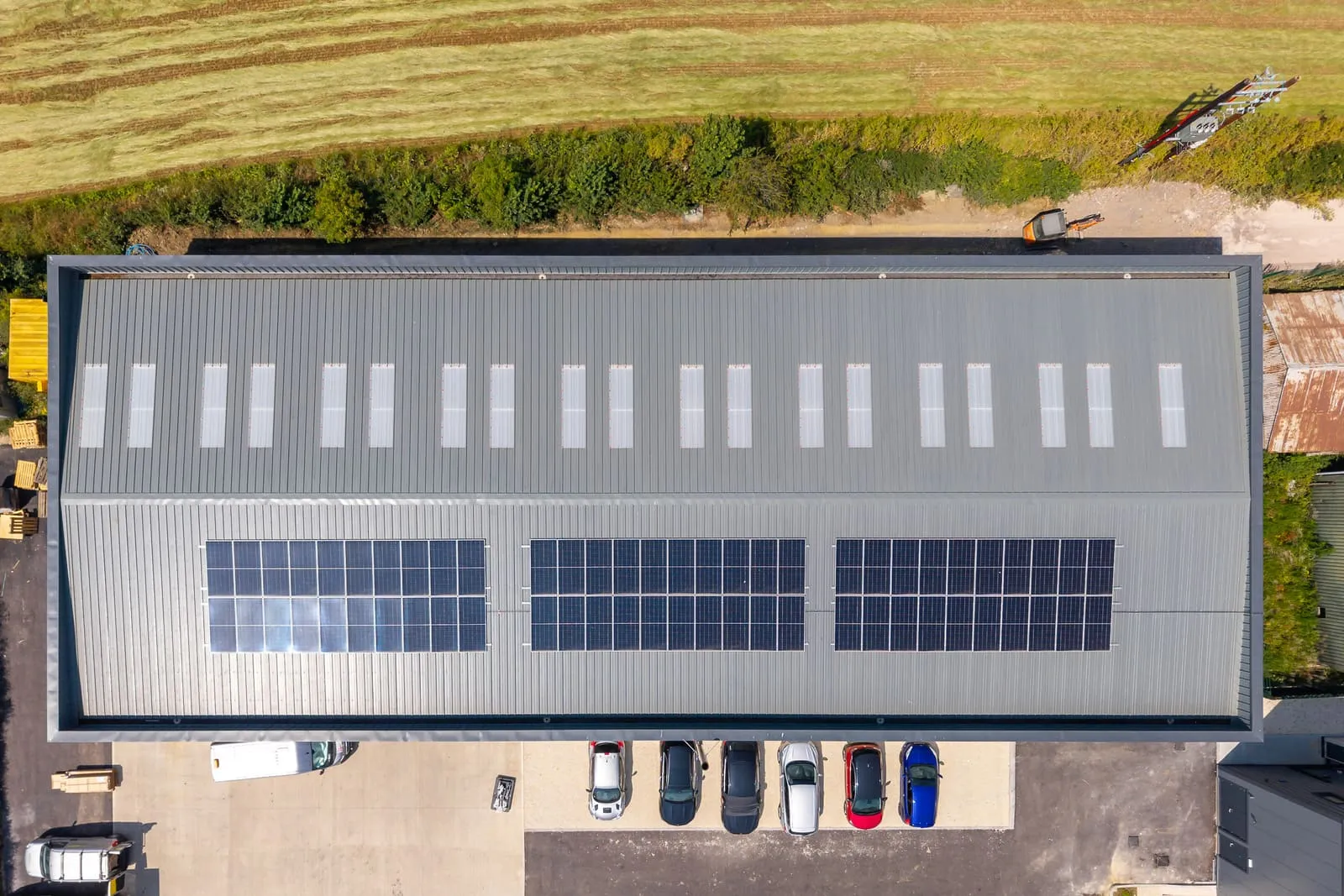
Over-cladding an existing industrial roof.
Over-cladding means fixing new insulated sheets over your existing roof instead of stripping it off. It is usually quicker, cheaper and less disruptive, and the building can stay in use. It only works if the structure can carry the extra load and the old roof is not a safety problem, so a survey comes first.
If your industrial roof is leaking, tired or failing on energy, you have two routes. Strip the old roof and replace it, or over-clad: fit a new insulated sheet system over the existing one. Over-cladding is often the better value, but not always. The deciding factors are the condition of the steel frame, what the old sheets are made of and what the building has to do while the work goes on.
This guide is for owners and facilities managers of steel-framed industrial buildings. It covers when over-cladding works, when it does not, the asbestos question, the 2027 Building Regulations change and the proposed energy rating rules for larger rented buildings. We explain technical terms as we go.
Over-cladding, also called over-sheeting, is the fixing of a new roof covering on top of the old one. In practice the new system is carried on support brackets or rails fixed through the old sheets into the purlins, the horizontal steel members that run across the roof. The old sheets stay in place and act as a liner underneath. The new layer brings new insulation, new weathering and a clean finish.
Over-sheeting is a recognised method, and it is widely used on older industrial units. The alternative, strip and replace, removes the old sheets first and leaves the building open to the weather until the new roof is on. That takes more time, needs more protection for what is inside and produces a lot of waste.
Over-cladding usually makes sense when three things are true. The frame is sound, the old sheets can be fixed through safely and the building cannot stop work.
It makes less sense when the old sheets are badly deteriorated, when there is widespread condensation damage to the frame, or when you want to change the roof pitch or add rooflights in new positions. In those cases stripping the roof is the cleaner answer.
This question comes before any other. The HSE advice is to assume that a building built before the year 2000 may contain asbestos until a survey shows otherwise. Many older industrial roofs are asbestos cement sheets, a mix of cement and asbestos fibre that is stable while intact but releases fibres when it is drilled, broken or badly weathered.
That matters for how you choose between the two routes. Over-cladding fixes through the old sheets, so drilling is involved. Stripping removes them, so handling and disposal are involved. Both need planning, and the right route depends on the sheet condition. Work on asbestos cement that is in good condition may be non-licensed, but if the material is damaged it can become notifiable non-licensed work, which has to be reported to the enforcing authority. A competent asbestos surveyor and a licensed or suitably trained contractor should advise. Do not let anyone drill the roof before the survey is done.
One practical point: a good over-cladding specification can reduce the amount of asbestos handled, because sheets are not removed. That is one reason the method is common on older asbestos cement roofs. It is not a reason to skip the survey.
Re-roofing counts as a renovation of a thermal element, so the energy rules in Approved Document L, Volume 2 apply to it. Under the current guidance for an existing roof, the target U-value (a measure of heat loss; lower is better) is 0.35 W/m²K for retained elements and 0.18 W/m²K for an improved or new one. The Part L 2026 edition commences on 24 March 2027, and work started under an application given before that date and commenced before 24 March 2028 stays under the old rules. Our guide to Part L 2026 for commercial buildings covers the dates and tables in detail.
If you are close to those dates, ask your contractor which edition the application will fall under. Do not assume.
EPC B
proposed minimum rating for rented non-domestic buildings over 1,000 m² by 2031 (government interim response, 18 June 2026; not yet law)
0.18
W/m²K target U-value for an improved roof under Approved Document L (existing roof retained: 0.35)
Possibly, if it is a rented building over 1,000 m². Since April 2023, the Minimum Energy Efficiency Standards (MEES) have required rented non-domestic buildings to have an Energy Performance Certificate (EPC) rating of at least E, with penalties capped at £150,000. The government's interim response on 18 June 2026 proposes that rented non-domestic buildings over 1,000 m² reach EPC B by 2031 where cost effective, and drops the earlier idea of an EPC C step in 2027. Smaller buildings would stay at E.
This is a proposal, not law. The changes need further legislation, and no date has been given. The response also keeps the existing exemptions and a seven-year payback rule, which means you are not required to carry out measures that take longer than seven years to pay for themselves in energy savings. If you let or plan to let a larger industrial building, a better insulated roof is likely to be one of the cheapest ways to improve the rating. We would not wait for the final rules before getting the roof assessed.
Price depends on area, access, panel specification and what the survey finds, so we do not quote a per-square-metre figure in a general article. What we can say is how the cost compares. Over-cladding avoids the cost of stripping and disposing of the old sheets, which is significant if they contain asbestos, and it avoids the cost of protecting the contents during the work. It adds the cost of brackets or rails and a little more fixing time.
For a like-for-like comparison, ask for both options priced on the same specification, and include in each one the survey, any frame repairs, rooflights, access and waste. Our cost guide for steel frame buildings shows how we break prices down, and the steel price piece explains why quotes have a short validity at the moment.
The order of work matters more than the product. A well-run job follows this order.
We have done this at scale. On the Magna site, one of our projects for a specialist confectioner, 10,500 m² of existing roof was over-clad while production carried on beneath. Our write-up of working on a live factory site explains how that was managed. Our cladding and roofing team handles surveys, design and installation. For wider context on how a building is put together, see our guide to steel portal frame buildings.
Book a survey. Get the structure and asbestos checked, then ask for over-cladding and replacement priced side by side. If you want us to look at your roof, contact us and we will say which route suits the building.
Often yes, because the old sheets stay in place, but a survey comes first and the contractor must be competent to work with asbestos materials. Drilling through damaged sheets can make the job notifiable.
The life depends on the product, coating and maintenance. Ask for the manufacturer's guarantee terms and what they cover, and for the expected life in writing.
Often not for like-for-like work on an existing commercial building, but a change of colour, profile or height can matter, and listed or conservation settings are different. Check with your local authority before you commit.
Usually it avoids stripping, disposal and downtime costs, so it is often cheaper overall. Get both priced on the same specification before deciding.
Yes in most cases, because the old roof stays in place as a weather barrier. Noise, access and safety controls still need planning.
Better roof insulation usually helps, since heat loss through the roof is a large share of the total in many industrial buildings. The result depends on the building as a whole, so ask for an assessment.
Existing rooflights are normally replaced or re-fitted as part of the new system. Old rooflights are fragile, so they need covering and safe access before any work starts.
Related service
Surveys, over-cladding and replacement roofs for industrial and commercial buildings.
