







Services
© 2026 MSB Group. All rights reserved.
MSB Group UK is the trading name of MSB Steel Ltd
Created by Just Chill
Industry News
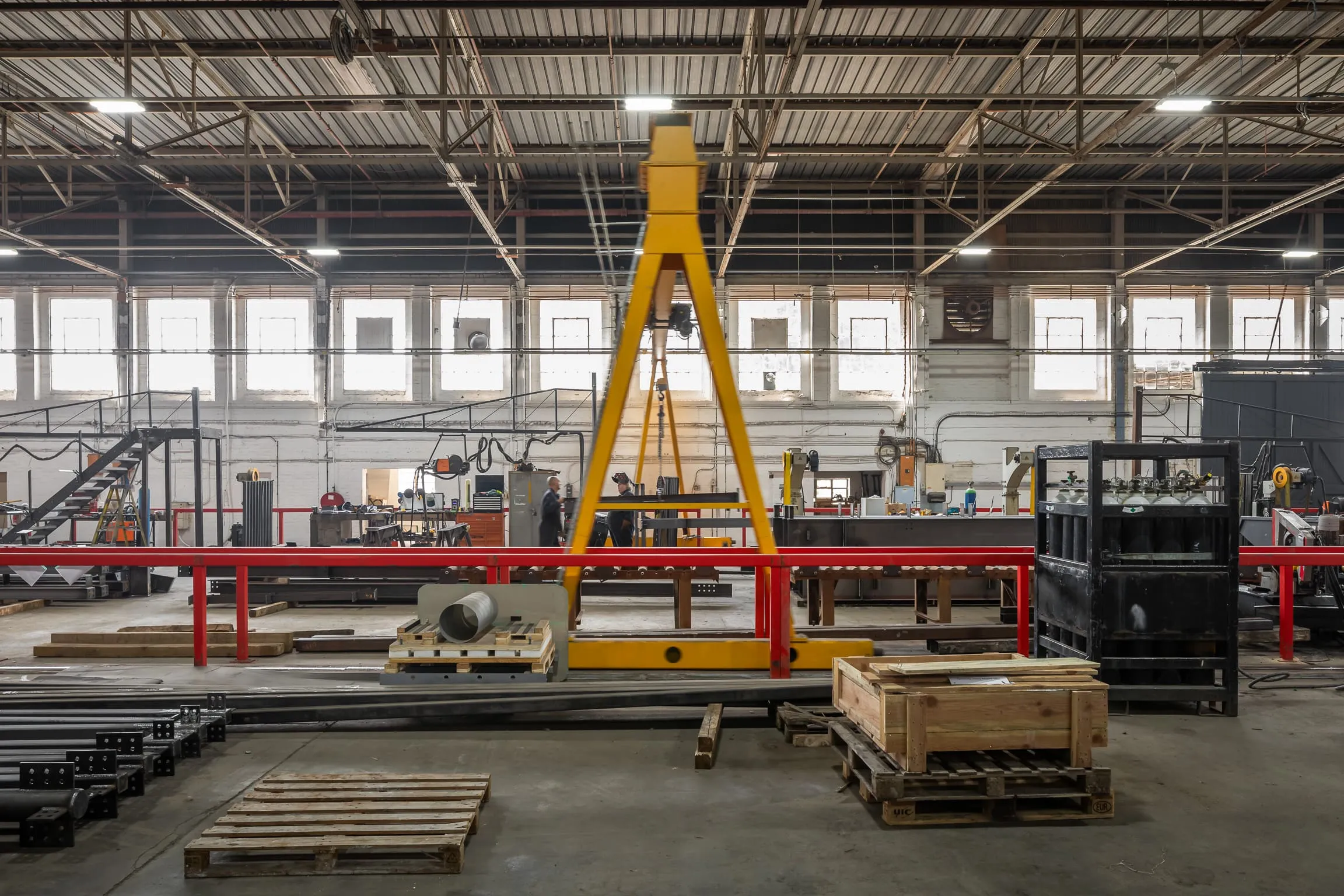
Steelwork in fabrication at MSB Group's workshop.
Fabricated structural steel prices rose 21.2% in the 12 months to August 2026, and imports above quota now pay a 50% tariff. A steel price quoted in spring may not hold this autumn, so the questions that matter are how long a price is valid and who carries the risk.
Steel prices in the UK are rising faster than any other building material the government tracks, and the rules governing imported steel changed on 1 July. For anyone with a steel frame building at the budget stage, the practical question is how long a quoted price will hold and who carries the risk if it moves.
Fabricated structural steel prices rose 21.2% in the 12 months to August 2026, the greatest annual increase of any resource measured by the Department for Business and Trade (DBT). BCIS, which republishes the DBT materials data, put the figure out on 8 October in its latest construction materials prices update.
The September 2026 edition of Costing Steelwork, produced by the BCSA, Steel for Life and Aecom, makes the same point from the supply side. It says structural steel prices have risen in 2026, that the 50% tariff on imported steel products since 1 July is likely to push costs up further, and that the full effect of the tariffs and quotas is likely to show only towards the end of 2026. It also expects commercial construction cost inflation to accelerate in the second half of the year.
The Construction Leadership Council (CLC) went further in a June 2026 statement, reporting cost increases of 14 to 18% on live projects and warning that panic buying was already lengthening lead times.
From 1 July 2026 the UK replaced its old steel safeguard with a new steel trade measure. Steel imported above a country quota now pays a 50% tariff by value, and overall quota volumes are 51% lower than under the safeguard it replaced. The 25% safeguard duty ended on 30 June. The detail is in the government's UK steel trade measure guidance.
Three details matter for anyone buying structural steel.
The CLC warns that the quota system could create shortages of particular steel grades and section sizes where domestic mills are at capacity or do not make the product. That risk falls hardest on less common sections and on tight programmes.
The UK carbon border adjustment mechanism (CBAM) starts on 1 January 2027 and covers iron and steel goods. The liable party is the importer, who must register, file returns and pay once imports reach £50,000 over 12 months. The rate follows the costs UK producers incur under the UK emissions trading scheme, adjusted for any free allowances, as set out in the government's CBAM policy paper.
Nobody can yet tell you what this will add to a finished building, and we would be wary of anyone who claims to. What it does mean is that steel bought through an import chain carries two layers of policy risk from next year, the quota tariff and the carbon charge, while UK-produced steel carries neither directly.
Raw steel is only part of a fabricated frame. Fabrication, connections, protective finish, transport and erection sit on top, so a 21.2% rise in fabricated structural steel does not translate one-for-one into the cost of a building. The effect on your budget depends on how much of the price is steel, where it is sourced and when it is bought.
To put a scale on it, take a 1,500 m² low-eaves warehouse. Costing Steelwork 37 puts a large-span portal frame at £116 to £151 per m², or £174,000 to £226,500 for the frame at the baseline index. A 10% movement in that frame price is £17,400 to £22,650. That is an illustration of sensitivity, not a forecast. Our full guide to steel frame building costs shows how the frame fits into the whole building.
21.2%
rise in fabricated structural steel prices, 12 months to August 2026 (DBT data via BCIS, 8 October 2026)
50%
tariff on steel imported above quota since 1 July 2026 (UK steel trade measure)
Price risk now sits in the gap between quote and order. A budget price from the spring is an opinion about the future, and the future has moved. BCIS's guidance for cost professionals on managing steel price uncertainty, published in June 2026, gives a sound framework, and these are the points that matter most for a building client.
If you are comparing quotes, check they were priced on the same date. A quote that looks cheap may just be older.
If the design is settled and the programme allows, reserving steel early reduces exposure to price movement and to quota shortages. It only helps when the price validity and the design freeze are both clear, because a reserved section that then changes in design is a cost, not a saving. Ask the contractor what has been ordered, from where, and what happens if the design moves.
We fabricate our structural steelwork in our own 45,000 sq ft workshop and erect it with our own site teams, which removes handovers from the chain. We still buy steel like everyone else and we are not immune to the market. What we can do is be plain about it: a price from us states how long it holds, and we tell clients early if the market is moving against a number we have given. If you have a project in the pipeline and a figure from earlier this year, send it over and we will tell you whether it still stands. Our steel fabrication and steel framed buildings pages explain how the work is organised, and our guide to checking a contractor before you sign covers the other questions to ask.
Send us the rough floor area, the use and the site, along with any earlier quote you hold, through our contact page. We will give you an indicative range, the date it is valid to and the assumptions behind it. For a building-specific view of cost, see how much a warehouse costs in the UK.
Fabricated structural steel rose 21.2% in the 12 months to August 2026, according to DBT data republished by BCIS. Tighter import quotas, a 50% tariff on steel above quota since 1 July and wider materials inflation all feed into it.
Since 1 July 2026, steel imported above a country quota pays a 50% tariff by value. Overall quota volumes are 51% lower than under the old safeguard, and quotas are released quarterly. Goods under contract before 14 March 2026 were exempt until 30 September.
Live raw steel prices change daily and are tracked by commodity services. For a fabricated frame, dividing the published Costing Steelwork rates by their design weights implies roughly £3,100 to £4,300 per tonne before cladding and groundworks. That is our arithmetic, not a quote.
Nobody can promise that. Costing Steelwork 37 expects the effect of the tariffs and quotas to show towards the end of 2026 and construction cost inflation to accelerate in the second half of the year. Plan around a price that may rise, and get validity dates in writing.
The charge falls on the importer of the goods. Whether any of it reaches a UK customer depends on the supply chain, so ask your contractor where the steel comes from and who fabricates it.
There is no standard. In a volatile market, shorter validity periods are common, so ask for the date in writing and for the price-movement mechanism that applies after it.
If design and ground information are settled, a fixed price removes the exposure but may include a premium for risk. If they are not settled, an indicative range with stated assumptions is more honest than a fixed number.
Related service
Structural steelwork fabricated in our own workshop and erected by our own team.
