


.webp)





Services
© 2026 MSB Group. All rights reserved.
MSB Group UK is the trading name of MSB Steel Ltd
Created by Just Chill
Industry News
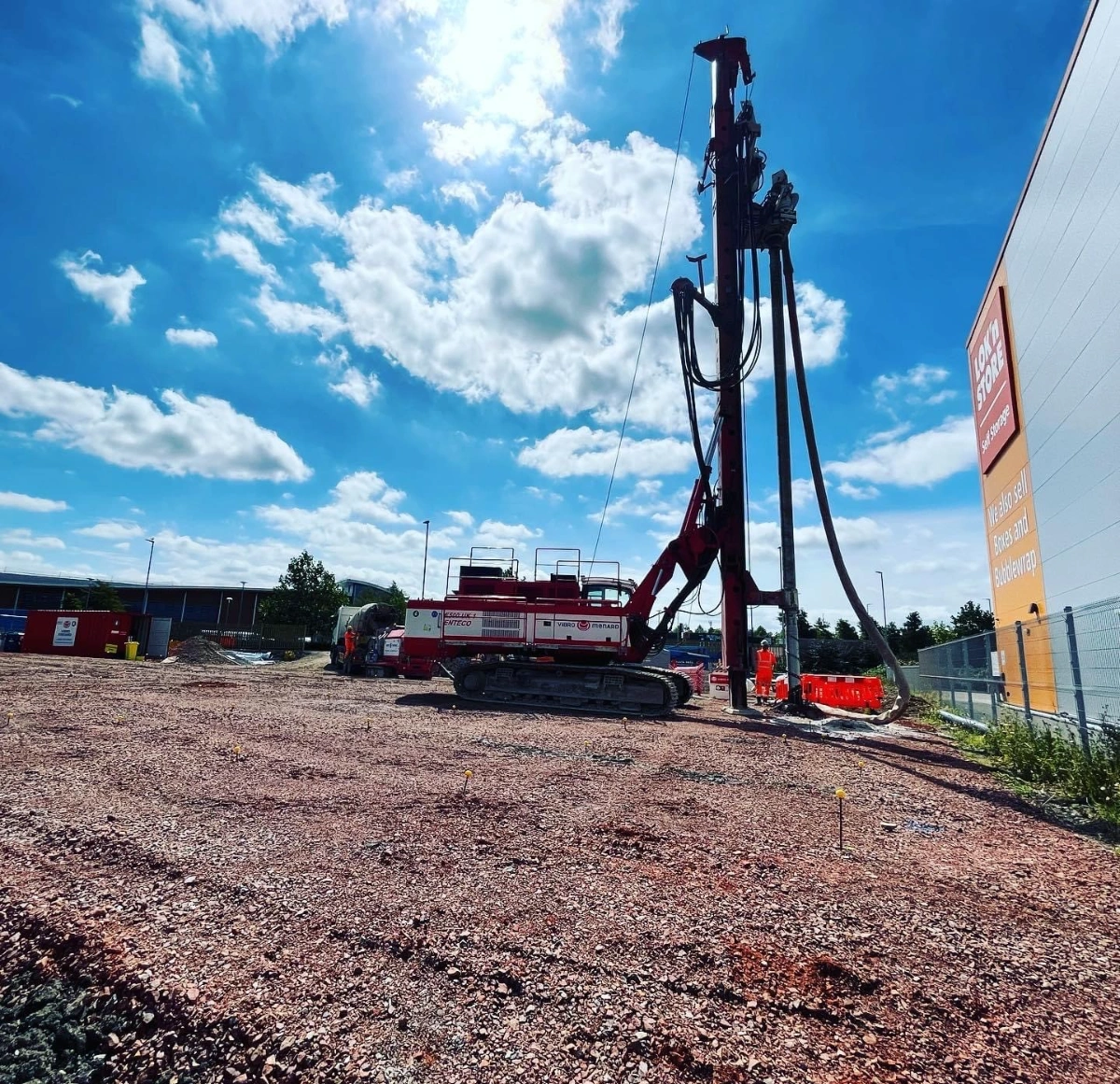
MSB Group UK design and build team on site.
Before you sign a building contract, check seven things: who is legally the principal contractor, what insurance sits behind the job, how healthy the company's accounts are, whether they have built something like yours, who does the work and what the price leaves out. It takes about an hour.
None of these checks require a solicitor or a quantity surveyor. They require a company number, twenty minutes on Companies House and a willingness to ask four slightly awkward questions. The contractors worth hiring expect them.
The stakes are real. The Insolvency Service recorded 3,866 construction company insolvencies in England and Wales in the 12 months to August 2026, more than any other sector, although 2% fewer than a year earlier. Output is soft too: the ONS has construction down 0.5% in the three months to July 2026. A contractor who is stretched is a risk to your programme and your budget, so it is worth knowing who you are dealing with. This guide is written for clients choosing a building contractor, and it uses plain terms so you can run the checks yourself.
Start with the job, not the price. Write down what you need built, where, by when and what must keep working while it is built. Then ask each contractor the same questions in the same order, so the answers can be compared. The seven checks below are that list. A good contractor will answer them in specifics and send documents. A poor one will answer in general terms and say the paperwork is on its way.
Under the Construction (Design and Management) Regulations 2015, known as CDM, a commercial client has duties of its own. You must make suitable arrangements for managing the project, give designers and contractors the information they need about the site, and allow enough time and money for the work to be done safely. Where more than one contractor will be involved, you must appoint a principal designer and a principal contractor in writing. The HSE guidance for commercial clients sets this out.
The principal contractor plans, manages and coordinates the construction phase, including preparing the construction phase plan before work starts. If you do not make the appointments, the regulations say those duties fall to you as the client. Most clients would rather hand them to someone who does this every week. Our write-up of what a principal contractor does shows the role on a live factory site.
A project is notifiable to the HSE if the work lasts more than 30 working days with more than 20 workers on site at once, or exceeds 500 person-days. Many commercial builds clear that bar, so ask the contractor early whether yours will.
Accreditations are third parties checking a contractor so you do not have to start from nothing. They do not replace your own checks, but a contractor with none of them is asking you to take more on trust. These are the ones you will meet most often on commercial and industrial work.
A certificate is only useful if it is current and covers the work you want done, so read the scope and the expiry date, not just the logo.
3,866
construction company insolvencies in England and Wales in the 12 months to August 2026, the most of any sector (Insolvency Service)
-0.5%
change in UK construction output in the three months to July 2026 (ONS)
Subcontracting is normal, and for groundworks or specialist services it is often the right call. The question to ask is about the parts that set your programme and your quality. On a steel framed building that means the frame: who designs it, who fabricates it, and who puts it up.
When those are three separate firms, you have three sets of deadlines and a lot of places for things to slip between. When one company does all three, there is one programme and one point of responsibility. At MSB we fabricate the steelwork in our own workshop and our own site team erects it, which keeps the programme in one set of hands. Not every client needs that, but every client should know which model they are buying.
Two quotes that differ by a third are rarely for the same building. Before you compare totals, check that each one states the span, height and specification it has priced, what is assumed about the ground, whether groundworks and the floor slab are in or out, what cladding and doors are included, who fabricates and who erects, and how long the price is held. Anything left blank is a cost that will turn up later. Our steel frame building cost guide shows the layers a price is built from, and our warehouse cost guide does the same for a warehouse.
Some signs deserve a second look. A price far below the others, with no explanation of what has been left out. Insurance certificates that are late or expired. Accounts filed late or not at all. No named principal contractor, or a reluctance to put the appointment in writing. No reference you can phone. A programme that is a single completion date. None of these proves a contractor is poor, but each is a reason to ask more questions before you sign, not after.
We would rather you asked these questions of us than took our word for it. We hold Constructionline Gold and SafeContractor accreditation, UKCA marking and UKAS-accredited SCCS certification for structural steelwork, and we send current certificates on request. Those are the documents to ask any contractor for. A recent example is our work for Magna Specialist Confectioners in Telford, where we are principal contractor on a turnkey extension to a working food factory. If you want to talk through your own project and what a sensible set of appointments looks like, our design and build team can take you through it, and our steel framed buildings page shows what we deliver.
Send us your brief and your site through our contact page, and ask us for the documents above. We will send them with an indicative range and a note of what it includes.
A main contractor is the firm you contract with to deliver the job. A principal contractor is a CDM role: the contractor appointed in writing to plan, manage and coordinate health and safety during the construction phase. On most commercial jobs they are the same company, but the appointment still has to be made.
The principal contractor controls the construction phase and is responsible for how the site is run. Subcontractors carry out parts of the work under that control and must follow the construction phase plan.
The client. If more than one contractor will work on the project, the client must appoint a principal designer and a principal contractor in writing. If the client does not, the client takes on their duties.
Employers' liability insurance is a legal requirement, with a minimum cover of £5 million. Most clients also ask for public liability and contract works insurance, with limits that match the size and risk of the job. Always ask to see the current certificates.
Read their filed accounts and filing history at Companies House, and look for late filings, shrinking net assets or new charges against the company. Ask how they are funding your job and what happens to your payments if they get into difficulty.
Common ones are Constructionline and SafeContractor, plus certification relevant to the work, such as UKCA marking and Steel Construction Certification Scheme certification for structural steelwork. Ask for current certificates and read what they cover.
About an hour for the paperwork if the contractor sends it promptly, plus time to phone a reference and visit a finished job. It is time well spent before a contract worth hundreds of thousands of pounds.
Related service
One team from design to handover, with one programme and one point of responsibility.
