






Services
© 2026 MSB Group. All rights reserved.
MSB Group UK is the trading name of MSB Steel Ltd
Created by Just Chill
Industry News
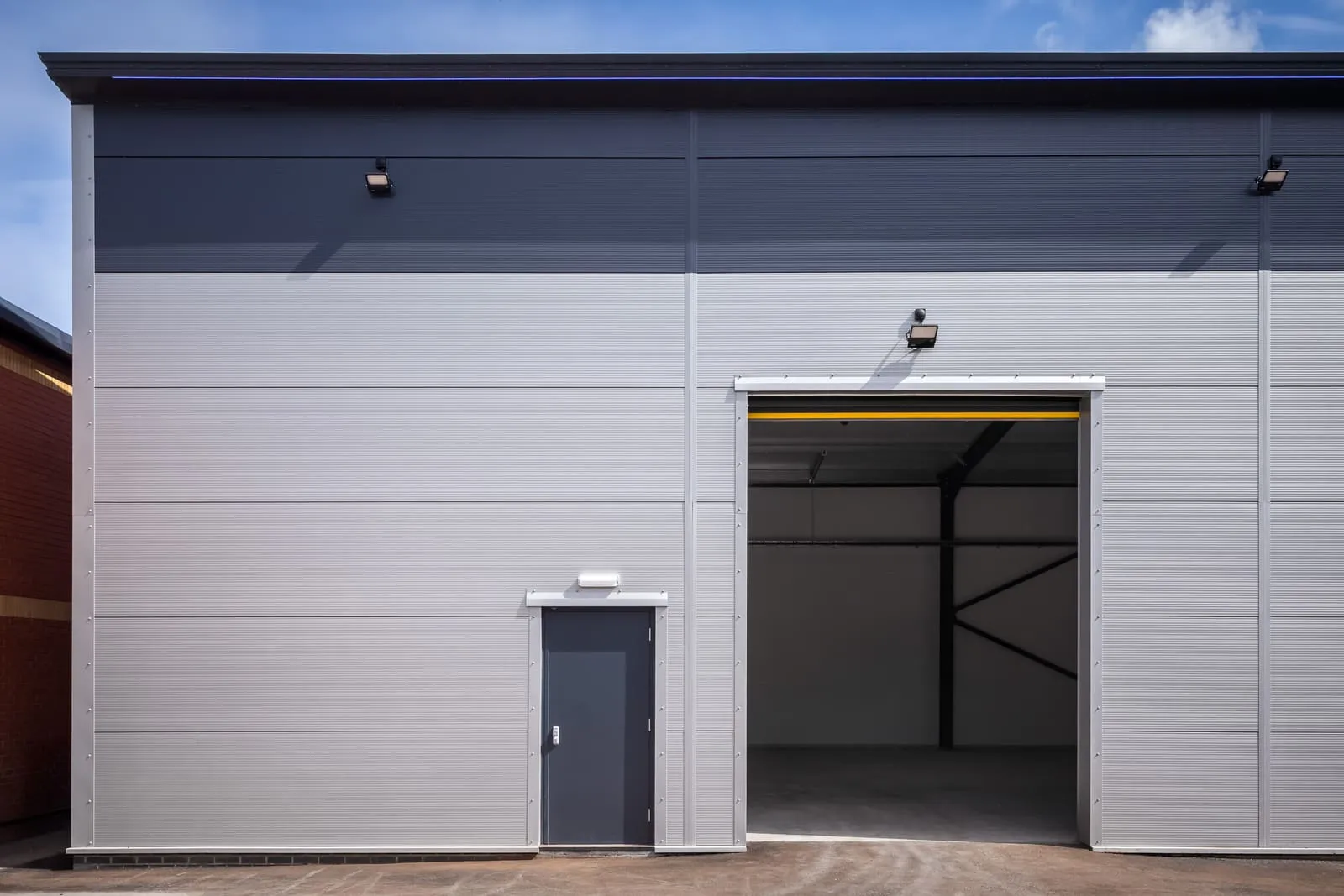
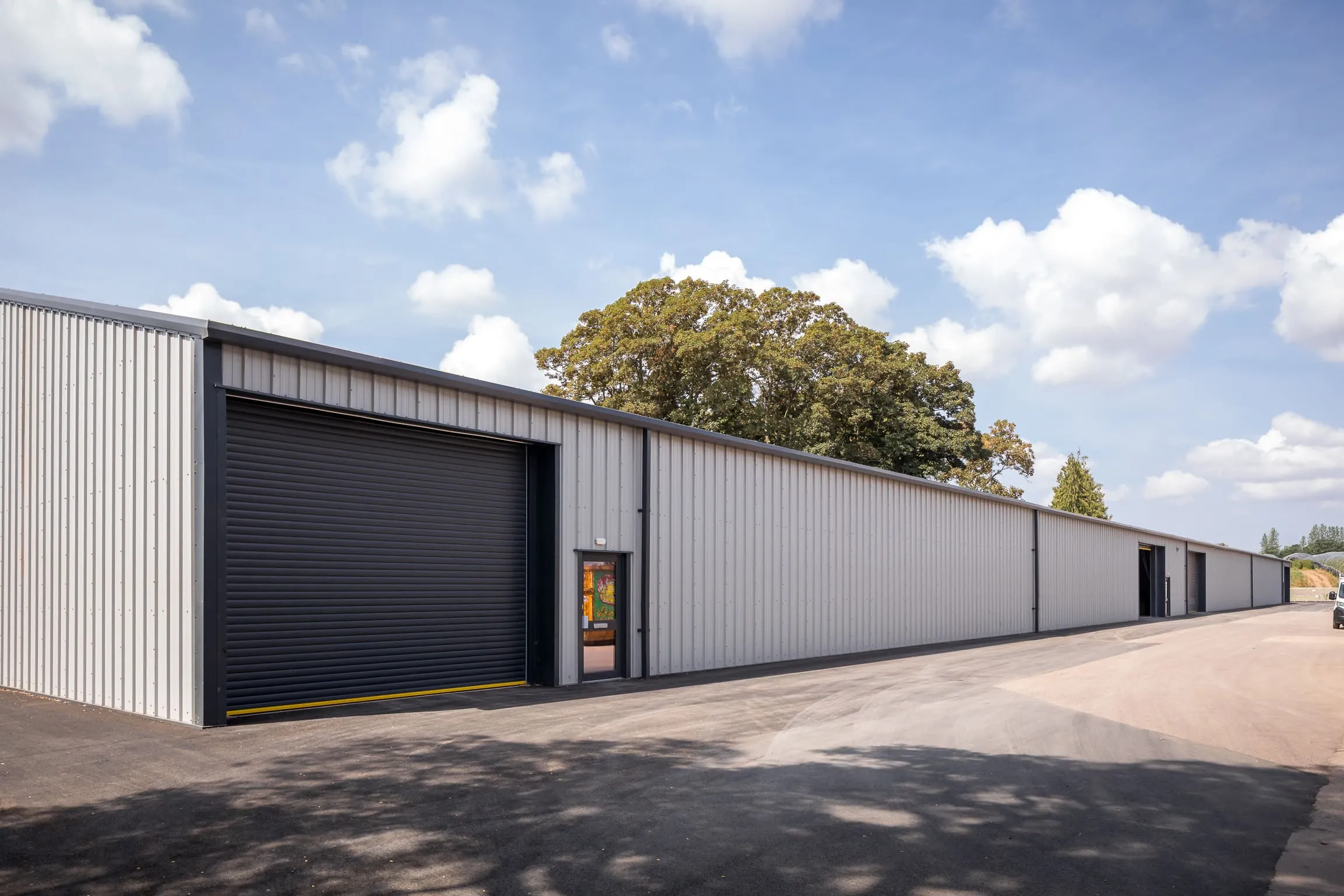
Roller shutter industrial door on a steel-framed commercial building.
Industrial doors fall into four main types: roller shutters for security and low cost, sectional doors where headroom is tight, high-speed doors for busy openings, and folding doors for very wide ones. UK price guides put a typical insulated electric roller shutter at roughly £2,000 to £9,000 per door, but the range is wide.
That spread is not a typo. Across the UK price guides we read, the same size of insulated door was priced anywhere from about £1,800 to £8,000, depending on who was writing. Treat any figure on a website, ours included, as a pointer for budgeting, not a quote. Size, insulation, security rating and what the quote includes all move the number.
This guide is for owners and facilities managers choosing doors for a new or existing industrial building. It compares the four types, explains the standards that apply and shows what drives price. We explain technical terms as we go.
The dividing line is usually how often the door moves. A shutter used five times a day is a different product from a door that opens every two minutes. A door specified for the wrong duty is a classic reason for early wear and breakdowns.
It depends on three things: how often it opens, how much heat you need to keep in and how much security you need. Roller shutters suit low-traffic, security-minded openings. Sectional doors suit tight headroom and better insulation. High-speed doors suit busy bays. Folding doors suit very wide openings. Many sites use a mix: a high-speed door on the busy bay and a roller shutter on the rarely used goods entrance.
Industrial and commercial doors are covered by the product standard BS EN 13241. Manufacturers should supply a declaration of performance, and the Door and Hardware Federation (DHF) Code of Practice covers the product marking, which in Great Britain can be UKCA or CE marking. Powered doors also have to meet safety-in-use requirements, set out in BS EN 12453.
The law does not set a fixed servicing interval. The DHF code says to follow the manufacturer's manual, to check safety systems at least annually, and to use competent people, with electrical work done by someone in a competent person scheme. Many door suppliers treat 12 months as the minimum sensible gap, and we would not go longer on a busy door.
For security, shutters can be rated to LPS 1175 from SR1 to SR5. As an indication, one UK supplier lists an uplift of about £200 to £500 for an SR1 rating, rising to about £1,500 to £3,000 for the higher ratings, which shows how quickly the cost moves. Ask your insurer which rating they expect before you specify.
12 m
approximate maximum width of an insulated double-skin roller shutter listed by UK manufacturers
12 months
the sensible minimum gap between professional services, though no fixed legal interval exists (DHF Code of Practice)
Published guides from UK suppliers in 2026 give these rough bands for supplied and fitted electric doors, ex VAT:
What moves a quote up or down is size, insulation, the motor and controls, the security rating, fire rating, the finish, and how much making good is needed around the opening. Always ask in writing whether the electrical connection, removal of the old door and VAT are included. The price differences between quotes are often just differences in what is left out. Our contractor checklist covers how to compare quotes line by line.
A cycle is one full open and close. The duty rating is how many cycles a day and over a lifetime the door is built for. Do the sum before you buy. A door that opens 10 times a day makes about 3,650 cycles a year. One that opens every two minutes across a 10-hour shift makes about 300 cycles a day, or roughly 75,000 a year on a five-day week of 250 working days. Those are very different machines. A standard shutter on the second duty will wear out quickly, while a high-speed door on the first is money spent on speed you do not use.
Most of these are cheaper to prevent than to repair. A service contract with response times written in is worth pricing at the same time as the door.
The door has to fit the building, not the other way round. Before the frame is designed you need the opening width and height, the headroom above for the curtain or panels, side room for the guides and any motor, and where power will come from. Fixings go to steel, concrete or masonry, and each needs its own detail, so the frame designer needs the door manufacturer's drawing. If a door is added to an existing building, the same checks apply and the opening may need a new lintel or trim.
Doors also form part of the building's thermal envelope, so ask for the declared U-value of any insulated door and check it against your Building Regulations requirements. Our guide to Part L explains the energy rules coming in March 2027. The openings also affect the frame design, which we explain in our guide to steel portal frame buildings.
We specify and install roller shutter, sectional and high-speed doors as part of our industrial doors service, sized for the vehicles and plant that will use them. Because we also design and build the frame, the door opening is set out with the structure from the start. If you are planning a new unit, our cost guide shows where doors sit in the overall budget, and you can contact us with your opening sizes.
It depends on how often it opens, how much heat you need to keep in and how much security you need. Roller shutters suit low-traffic, security-minded openings, sectional doors suit tight headroom and better insulation, and high-speed doors suit busy bays.
Manufacturers list single-skin shutters up to about 10 to 11 metres wide and insulated ones up to about 12 metres. Wider openings usually need a folding door or a sectional or high-speed option.
Published UK guides range from about £2,000 to £9,000 per insulated electric door, with large loading bay doors from about £6,000 to £12,000 or more. Get a written quote that says what is included.
There is no fixed legal interval. Follow the manufacturer's manual, have safety systems checked at least once a year, and use a competent engineer. Busy doors may need more frequent attention.
Sectional doors generally insulate better. Insulated double-skin roller shutters narrow the gap, so compare declared U-values rather than door type alone.
Usually yes. The opening needs checking for structure, headroom and fixings, and it may need a new lintel or trim. Send the supplier the opening size and wall type before you order.
Yes. BS EN 13241 is the product standard, and powered doors must also meet the safety-in-use requirements of BS EN 12453.
Related service
Roller shutter, sectional and high-speed doors sized and installed to suit vehicle and plant access.
