








Services
Industries
© 2026 MSB Group. All rights reserved.
MSB Group UK is the trading name of MSB Steel Ltd
Created by Just Chill
Industry News

Photo: Rob Lambert / Unsplash.
Steel fabrication is the process of cutting, shaping, welding and finishing raw steel sections and plate into the beams, columns and frames a building needs. A fabricator works from engineers' drawings, so every piece is made to order rather than bought off a shelf.
A fabricator takes steel in its raw form, usually standard rolled sections such as beams and columns, plus flat plate, and turns it into finished components that bolt or weld together on site. The work is driven by drawings from a structural engineer. The fabricator adds detailing: the exact lengths, holes, plates and welds that let each piece connect to its neighbours.
That makes fabrication different from manufacturing. A manufacturer makes the same product again and again to a fixed design. A fabricator makes one-off or small-batch pieces to a specific job, so accuracy and coordination matter more than volume.
Most building projects follow the same sequence.
Steelwork sits at the start of a build and the rest of the programme depends on it. If steel arrives late or does not fit, groundworks, cladding and every trade after it wait. A fabricator that controls its own workshop can schedule work around the contractor's programme instead of a supplier's order book, and can correct a problem without waiting on another company.
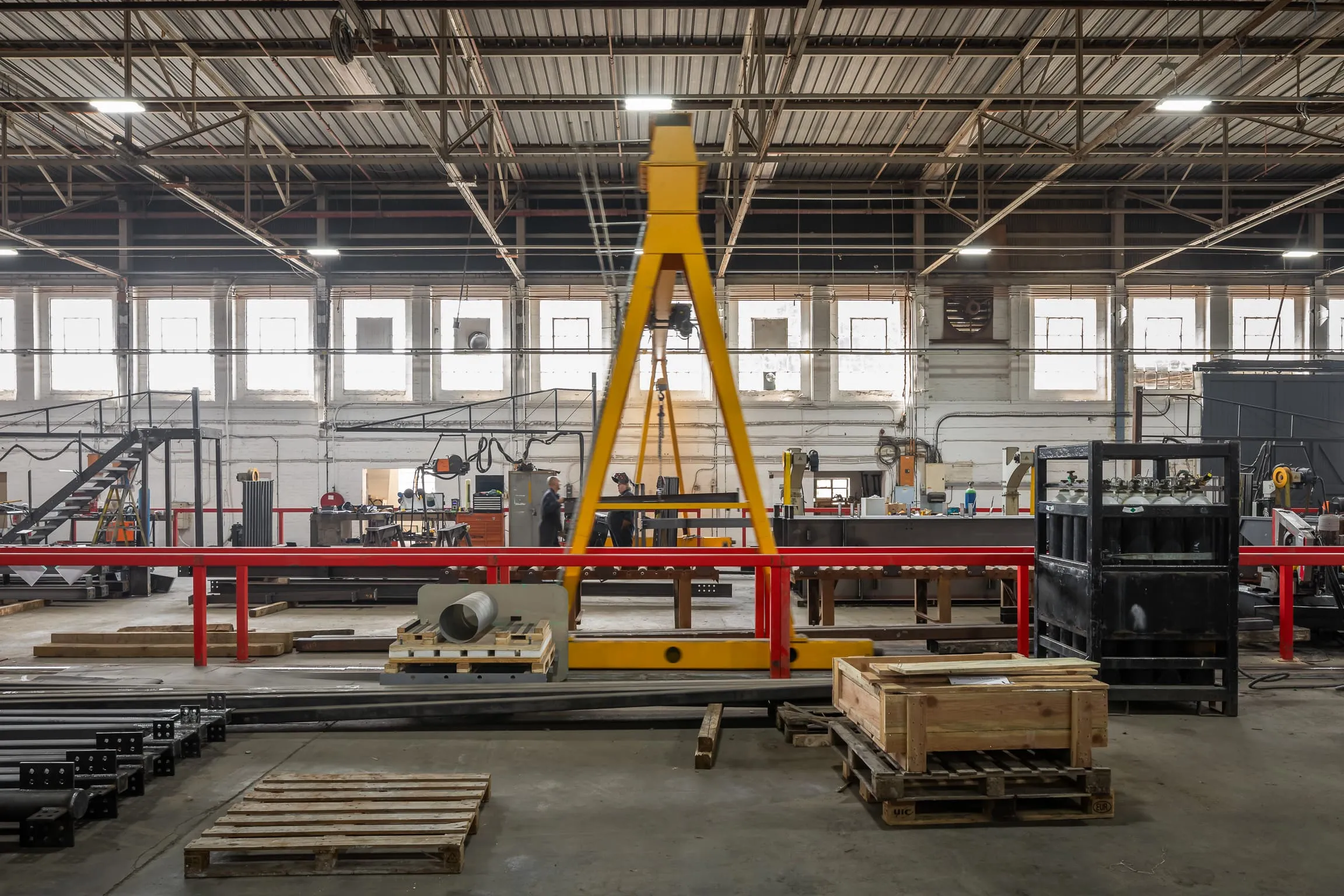
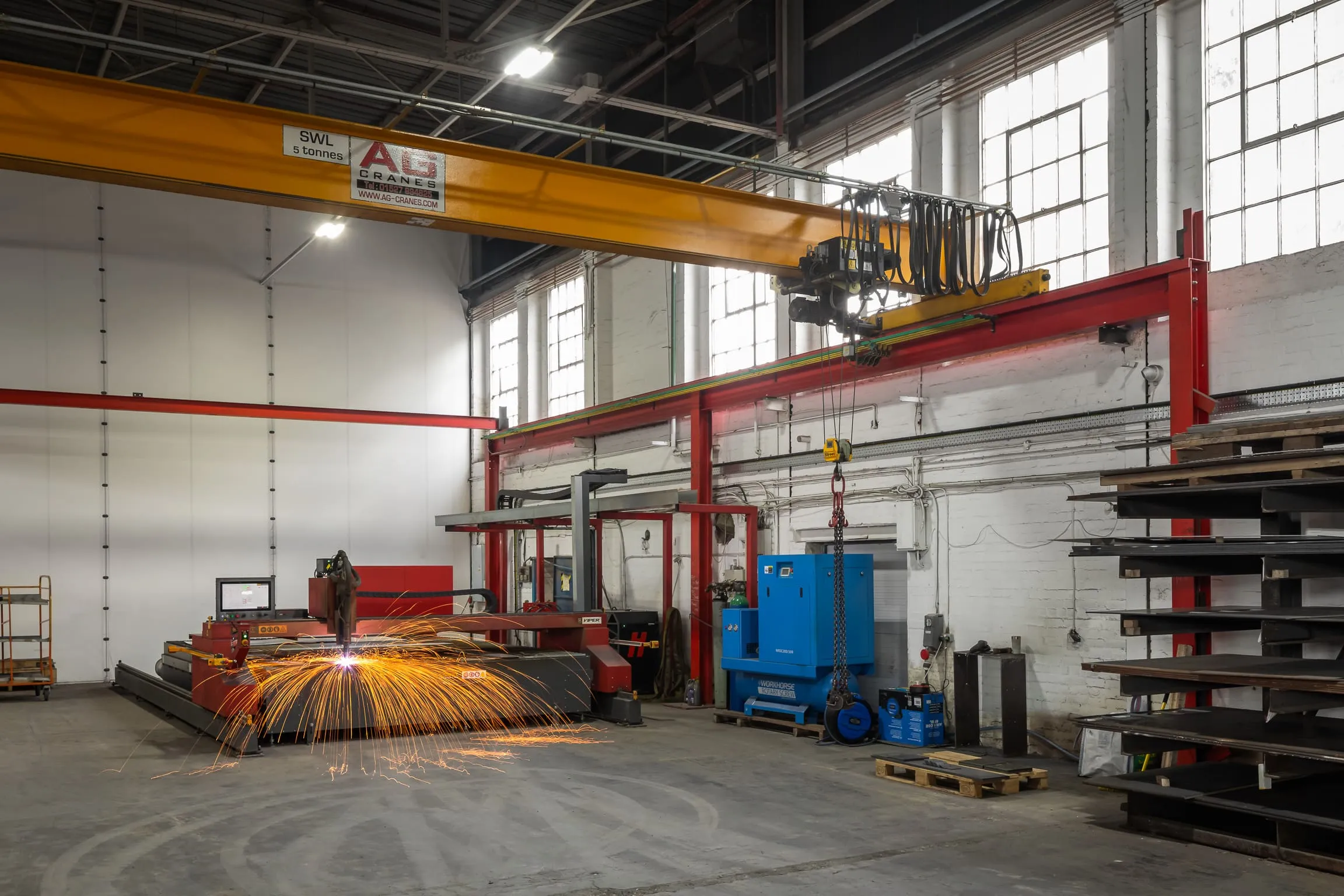
MSB Group runs fabrication in its own workshop as part of its design and build service, so steel, groundworks and erection are planned together. See our steel fabrication service for how that works on a live project.
The execution standard for structural steelwork is BS EN 1090, which sets execution classes and requires the fabricator to run a certified factory production control system.
A good fabricator answers these without hesitation and shows documents rather than describing them.
Fabrication is one link in a chain. The steel frame has to meet the foundations designed for it, and the cladding has to fit the frame. That is why many clients prefer one team to run groundworks, fabrication and erection under a single contract. Our design and build and steel framed buildings pages show how the pieces connect.
A steel frame is made of primary and secondary steel. Primary steel is the main skeleton: columns that carry loads to the foundations and beams or rafters that span between them. Secondary steel fills in the structure: purlins and side rails that support the roof and wall cladding, bracing that keeps the frame stable, and the plates and cleats that join everything. Staircases, mezzanine floors and platforms are also fabricated, often as separate packages.
Each of these has different tolerances and finishes. Primary steel is heavy and welded to high standards. Secondary steel is lighter and made in volume, but it still has to line up with the cladding. A fabricator that understands the whole building makes better choices about where welds go and how pieces are bolted.
Steel is a traded commodity, so the price of raw material can move between quotation and order. Ask whether a quotation is fixed, for how long, and what happens if the price changes. Our article on steel prices and imports explains the main drivers. Programme risk comes from detailing, material supply and surface treatment, so ask for each stage to be dated. A realistic programme, agreed at the start, protects the groundworks and cladding that follow. The cost guide shows how fabrication fits into the total price of a building.
Manufacturing makes the same product repeatedly to a fixed design. Fabrication makes one-off or small-batch components to a specific job, working from the engineer's drawings.
No. Welding is one step. Fabrication also covers detailing, cutting, drilling, forming, fit-up, inspection and surface treatment.
They stand for execution class, the level of quality control set by BS EN 1090 for the steelwork. The classes run from EXC1 to EXC4.
It depends on the size and complexity of the frame, the detailing and the surface treatment. A fabricator should give a dated programme tied to the site start.
A fabricator makes the steel. A contractor like MSB manages the whole build, including fabrication where it is done in house, so the steel is planned with the groundworks and cladding.
Related service
In-house structural steel fabrication as part of one design and build contract.
